




There are those moments when a new player enters the field and should make the established incumbents nervous. The Arkel Coast is exactly such a candidate. We're dealing here with a dual-boiler espresso machine that doesn't come from the classic Italian forges in Milan or Florence, but is completely manufactured in Portugal.
At a price of around 2,300 euros, it positions itself in an extremely exciting segment. It's more expensive than classic entry-level machines, but significantly cheaper than the cult objects from La Marzocco, which often cost double. But how much machine do you really get for this money?
We tested the Arkel Coast over months, examined various iterations, and can now say: The model before us convinces and doesn't need to hide from the aforementioned manufacturers at all.
| Feature | Arkel Coast |
|---|---|
| Price | approx. 2,300 € |
| Type | Dual-boiler with vibration pump, manufactured in Portugal |
| Coffee boiler | 0.7 liters, integrated as saturated group in brew head |
| Steam boiler | 1 liter, separately switchable |
| Flow control | Paddle with bypass system |
| Heat-up time | approx. 12 minutes |
| Water tank | 2.5 liters (no direct water connection) |
| Drip tray | 1.2 liters |
| Dimensions (W × D × H) | approx. 37 × 37 × 40 cm |
| Weight | 23 kg |
Design & Dimensions: Architecture for the Kitchen
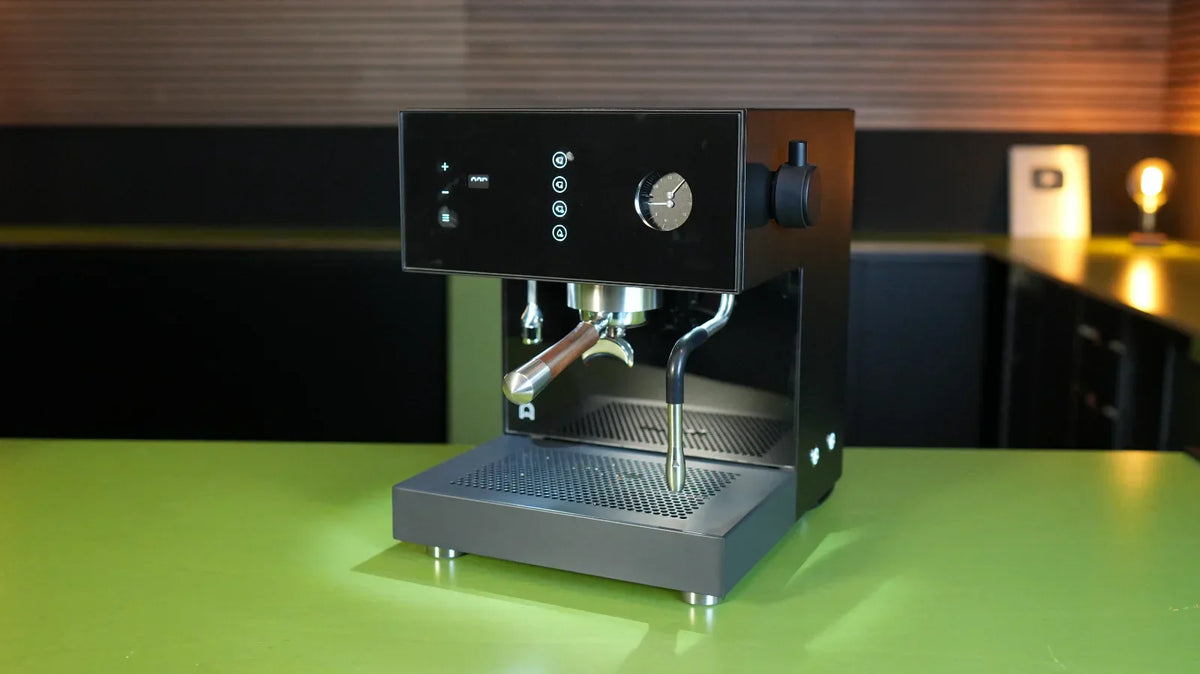
When the Arkel Coast stands before you, it appears with its compact rectangular shape like a built object. It consistently avoids rounded edges or retro references. At a height of 40 cm and a width and depth of just over 37 cm, it's an almost square monolith that stands calmly and settingly in the room.
The front appears like a facade – a smooth, dark glass surface that also displays the control panel. The material underscores this massive claim: the machine weighs a proud 23 kilograms. Dark metal dominates, everything looks strict and disciplined. During our haptics check, we found no sharp edges whatsoever, and the finish feels very high-quality.
In detail, the Arkel Coast shows itself to be functional but with small peculiarities:
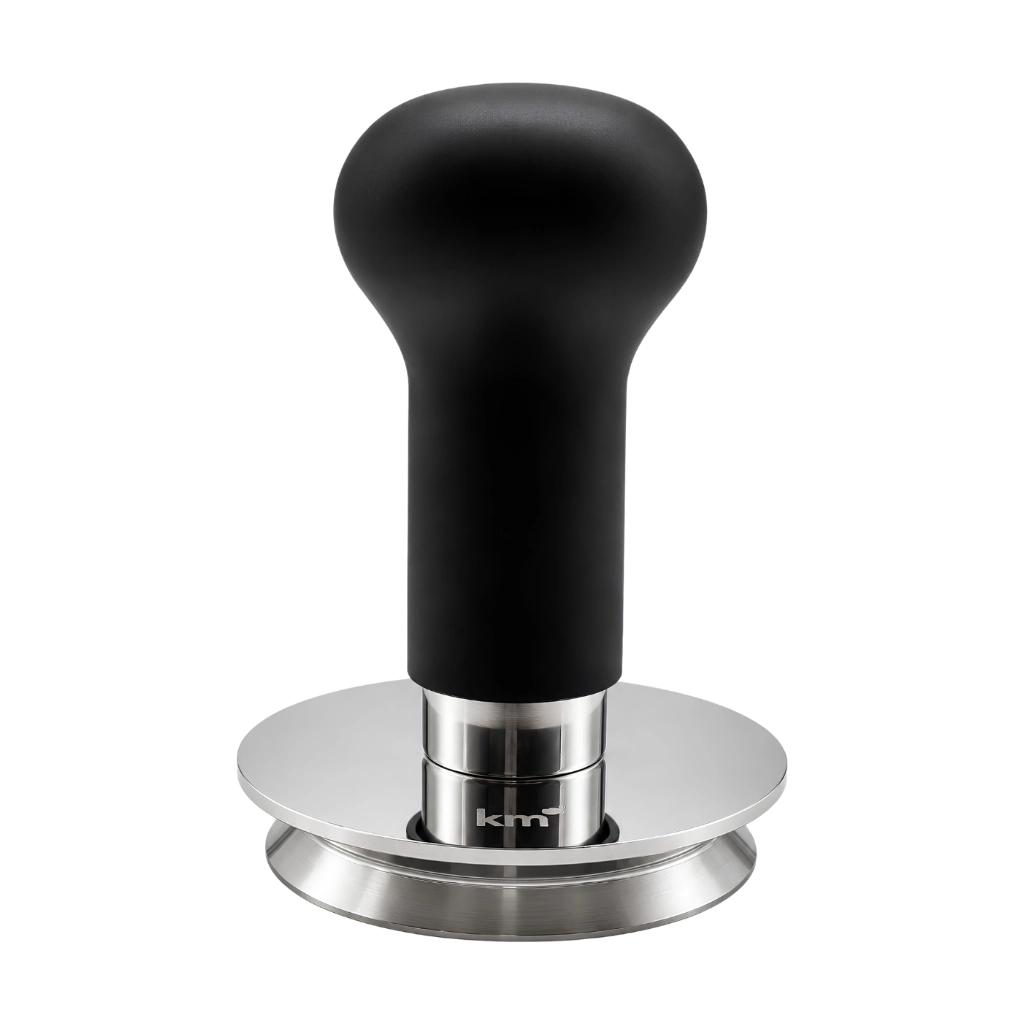
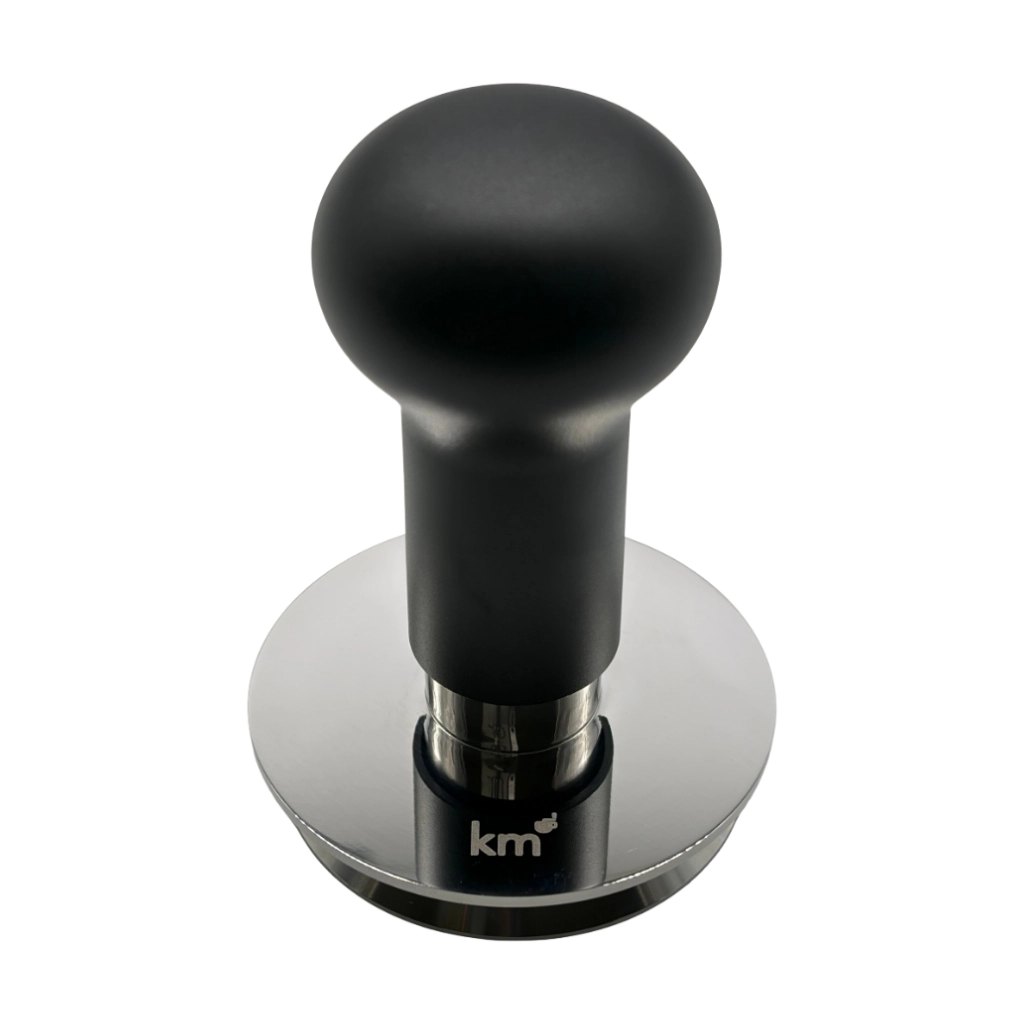
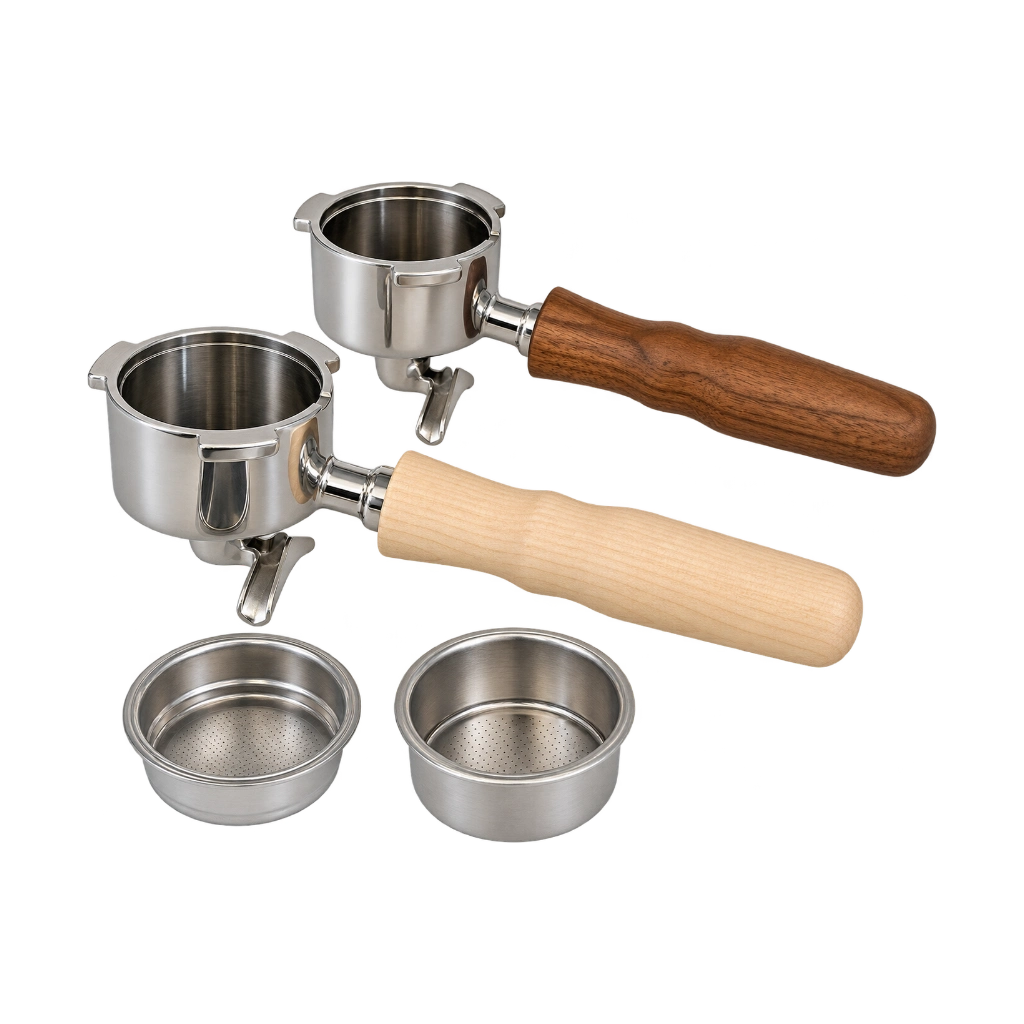
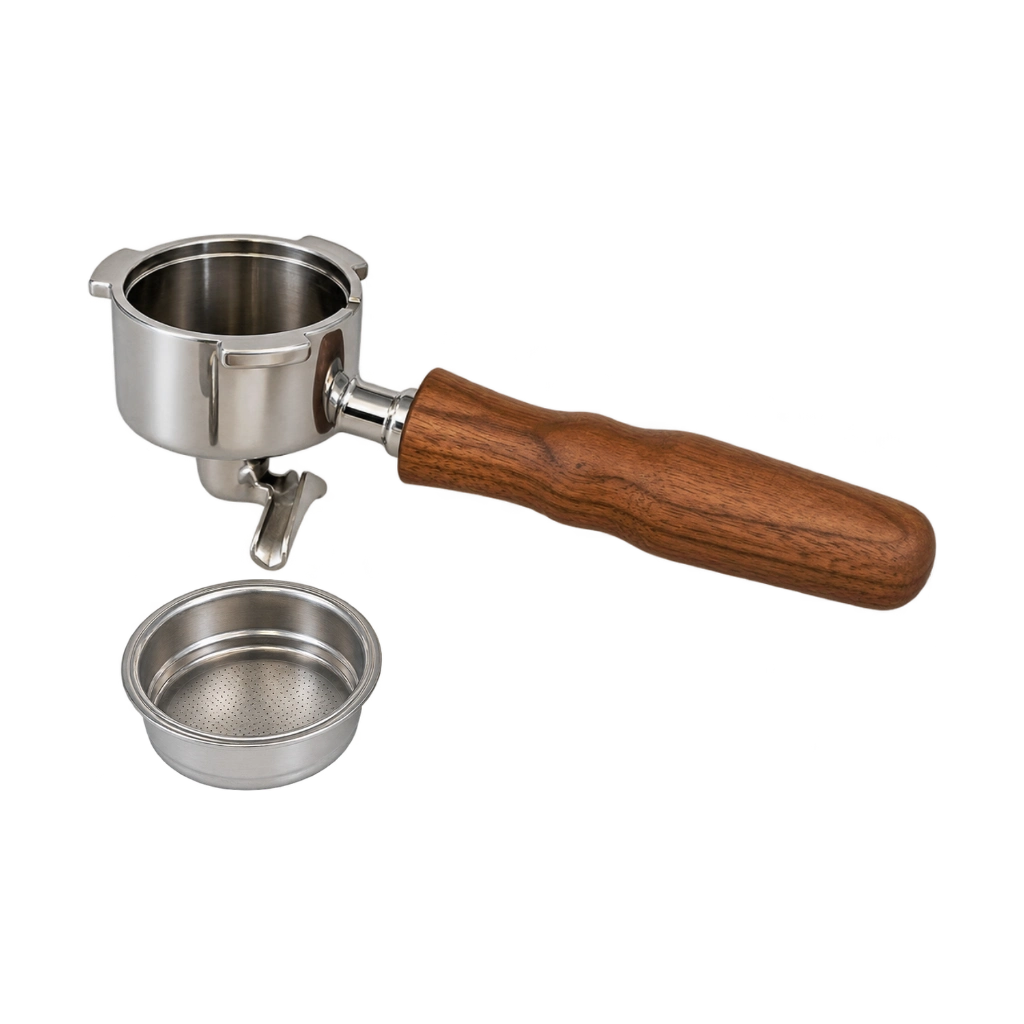
We rate the build quality of the Arkel Coast with 7.5/10 points and the accessories with high-quality tamper, portafilter, and basket with 8/10 points.
Technology & Heat-up Time: A Sprint for a Dual-Boiler
Those familiar with classic E61 dual-boilers know the waiting: often 25 to 30 minutes pass before these chrome bolides are truly heated through. The Arkel Coast breaks this unwritten rule. In our test protocol, we were pleasantly surprised: After just 12 minutes, the machine is ready to go.
How does it achieve this? The engineers rely on a 0.7-liter coffee boiler that's directly integrated as a saturated group into the brew head. This is supported by supplementary heating that should ensure temperature stability from the start. The 1-liter steam boiler in the rear acts completely independently and can be switched on separately. This means: if you only want an espresso in the morning, you leave the steam boiler off and save time and energy.
These 12 minutes are a real practical advantage. Want an espresso spontaneously in the morning? No problem with the Arkel Coast. This puts it into the territory of fast thermoblock machines, but it offers the thermal mass of a true boiler. But to be honest: while it outpaces many boiler colleagues, there are now machines with thick-film heaters that are ready after just five minutes. So the Arkel is very fast for its type, but not the absolute record holder on the market.

Energy measurements in lab check
Testing any espresso machine includes in our protocol an impartial look at the electricity meter. Here, the Arkel Coast benefits noticeably from the fast heat-up time, but shows two faces – depending on how you use it.
The efficiency of the Arkel Coast is literally in your hands: use the toggle switch for the steam boiler consciously, and you'll have one of the most economical machines of its class in your kitchen.
Taste & Espresso Quality: When Physics Meets Craft
Let's talk about the most important thing: what ends up in the cup in the end? How does the espresso taste that we brew with the Arkel Coast? Of course, this depends on the choice of beans and our execution. But the Arkel Coast provides the foundation.
The temperature profile: A character with "lift"
The basic requirement for good taste is stable temperature. In our detailed lab analysis, the Arkel Coast shows very specific behavior here. Once it's warmed up, it hits the target temperature of 93 degrees almost perfectly – we measure a mean value of 92.87 degrees in the steady state. This earns full points in the "target achievement" cluster. But be careful with the first espresso in the morning: the "first shot" averages about 1.5 degrees below the target temperature. So a blank shot with hot water through the portafilter makes sense so the temperature is spot-on from the start.
It gets interesting during the shot. We observe a thermal "lift". Unlike many machines whose temperature drops slightly toward the end, the temperature on the Arkel rises during extraction by almost 2 degrees (intra-shot rise). Technically, this isn't a defect, but it has sensory consequences: heat at the end of extraction emphasizes bitterness. This makes the profile somewhat "more aggressive".
Also, you need to know the offset: we found that the display reading doesn't exactly match the temperature at the portafilter. At a set 92 degrees, about 93.5 degrees arrive at the puck. That's physics, not a problem. Since this offset is constant, you can simply adjust: set the display one to two degrees lower to reach your desired temperature.


In our protocol, the Arkel Coast receives 6 out of 10 possible points for temperature protocol. This is respectable in our quite demanding test, especially since the machine loses most points in the WBC protocol.
1. Cluster A: Everyday practicality (4.0 / 5.3 pts)
Part 1: Cold start / First shot (2.0 / 3.3 pts):
Mean shot 1: 91.40 °C vs. mean shot 3–5 (steady state): 92.87 °C. Difference: 1.47 °C.
The first shot is roughly 1.5 degrees cooler than the warmed-up state. This is just barely in the range for 2.0 points, but it's on the edge. A blank shot eliminates this delta.
Part 2: Target achievement / Calibration (2.0 / 2.0 pts):
The machine hits the target temperature almost perfectly in the warm state. Full points.
2. Cluster B: Intra-shot stability (1.3 / 2.7 pts)
Analysis shot 5 (sec. 8–25): starts at 92.13 °C, ends at 94.03 °C.
The temperature rises almost 2 degrees during extraction. Per rule V2.1, a "slight rise" is rated more harshly than a drop due to sensory disadvantages (bitterness).
3. Cluster C: WBC performance (0.7 / 2.0 pts)
The Arkel stays safely within the 3-degree window for home machines but shows an upward-drifting character instead of staying constant on one line like professional machines.
Flow control as taste tuner
The Arkel has a powerful tool for quality improvement or quality assurance with its flow controller on the right side. The technology behind it isn't a simple needle valve that just restricts inflow. Arkel uses a bypass system in the latest version. When you move the paddle, you open a bypass and deliberately divert excess pressure. The pressure gauge always shows you the effective pressure on the coffee puck.
This opens three scenarios for taste:
The solid temperature performance and additional flow control are powerful tools for pulling very good espressos shot after shot. The Arkel Coast scores 7 out of 10 possible points in the espresso potential category.
A quick note on volumetrics
Please don't rely on the time automation for taste. Since the machine only measures time (e.g., 25 seconds) and not volume, the result in the cup varies enormously as soon as you change the grind or use the paddle. For reproducible taste, there's no way around a scale. Time-based dosing is better than no dosing at all. And once the grind is properly set and you work consistently
Steam power: The fog machine
If you like cappuccino, you'll love this machine. The steam boiler has real power. In our test, it took only 23 seconds to heat a large portion of milk to 60 degrees. Michel aptly called the system a "fog machine". The foam is fine-pored and the steaming process barely falters even with many 0.6-liter pitchers in succession.
The Arkel delivers excellent frothing performance: 8 out of 10 points in our test protocol.
Cleaning and Maintenance
One point often forgotten is maintenance. Here, the Portuguese thought ahead. There's a special drain valve at the bottom of the machine with which you can completely empty the boilers if you want to descale them yourself. You read that right! In principle, we do not recommend descaling espresso machines with boilers yourself at home. Descaling is necessary from time to time even with very soft water that's constantly filtered. But for residue-free descaling, most espresso machines must be extensively disassembled and the boiler opened, otherwise descaling liquid remains in the machine.
It's different with the Arkel: the drain system allows you to completely empty the boiler. And with that, you can easily descale it yourself. That's worth real money. A descaling service every two to three years quickly costs 200 to 300 euros! When comparing prices with other classic machines on the market, you can deduct quite a bit from the Arkel in terms of ongoing costs over five years and invest it directly in the machine instead.

Catering Potential: Ready for the Club Event?
We're often asked whether such machines can be used for events, weddings, or the proverbial club gathering. The Arkel Coast sends mixed signals here but is basically an exciting candidate for mobile use.
On the plus side are the brutal steam power and the huge drip tray. If you need to knock out cappuccinos in rapid succession, you'll love not having to empty the tray every five minutes. Also, temperature stability with many consecutive shots makes it reliable. And at 23 kg, it's just still transportable without needing a shipping company.
There's one catch for professional continuous use, though: the Arkel Coast has no direct water connection and the drip tray can't be connected to drainage either – though it is very large. You're dependent on the 2.5-liter water tank. With high throughput, you'll need to constantly watch the water level and refill. For a private garden party or small-scale catering, it's top – for high-frequency business, it lacks the water tap. But if you can live with that, you get a real workhorse. In a small café, however, the machine would be in the wrong place.
Summary
The Arkel Coast is a challenge. A high-quality dual-boiler espresso machine made with components from Portugal and Europe, and thanks to flow control, it undercuts machines like the Micra, Zuriga, or Mozzafiato.
Good temperature stability in everyday use and a contact person in the DACH region make it an attractive espresso machine, and the frothing performance is unmatched. We're very impressed with this espresso machine debut from Portugal and are already looking forward to the next announced model called "Tide".