






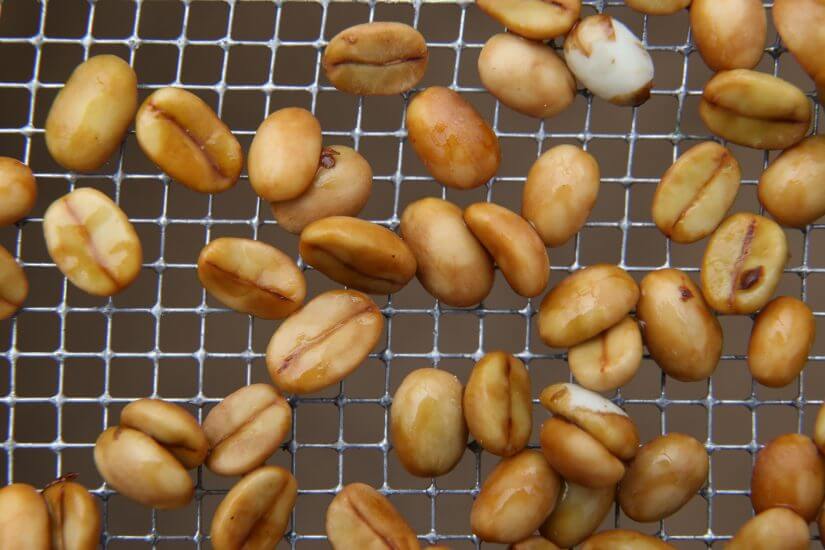

Why the Topic "Coffee and Fermentation"?
When we think of innovations in specialty coffee, we usually think of advances in machines, grinders, scales, and roasters. Things that are supposed to help us make better coffee. But fermentation?
Lucia Solis – a leading expert in coffee fermentation (here's an introductory interview with her) – asks therefore:
what if it's not machines, but microorganisms, i.e., living machines, that can make our coffee better?
Lucia is thinking about yeasts, microbes, and sugar. Humanity has used yeast populations for thousands of years to make bread, beer, wine, etc. So why do we apply this knowledge so sparingly or not at all to coffee?
But before we can answer this question, let's explore the topic of fermentation in detail from the beginning. What it is, what it isn't, and what's possible with it.
Often you hear from roasters or baristas that the coffee bean "was picked, depulped, fermented, and dried." Does it have to be this way? No. Coffee doesn't always have to be fermented. Often it's not just about taste, but also about technical and financial feasibility.
We've divided this article into five chapters:
1. Fermentation and Coffee
2. Microbe-Climate Instead of Micro-Climate
3. Fermentation as a Flavor Enhancer
4. Fermentation with Starter Cultures
5. Coffee Maker Goes Science – Research Project on Santa Rita
1. Fermentation and Coffee
For several years I judged at barista world championships. Often I heard from participants during their 15-minute presentation that the coffee was "depulped, fermented, and then dried."
The first and last of these are mechanical processes that I've seen and understood during previous visits to coffee farms. The middle part, however, the "fermentation" of the coffee, never quite made sense to me. There were so many questions, so many inconsistencies, and so many opinions about it.
So I wanted to learn more about this important topic and immersed myself in these materials. I read what the relevant coffee literature had to offer. But many of the commonly available information was similar, the added value seemed limited.
To put the scientific, precise information into perspective, I needed some time. But once all the scientific terms settle, a new world opens up. Two events helped me perceive the whole topic much more vividly:
- I came into contact with the highly current and urgent work of Lucia Solis
- we became scientifically active ourselves – in a collaboration with ZHaW, we conducted a research study on our Santa Rita farm in Nicaragua (internal link)
What is Coffee Fermentation?
It's not necessarily clear that coffee can be fermented. And if it can, there's disagreement about what fermentation in coffee actually is.
When we talk about coffee, we often think of the bean and not the coffee cherry. For this and further articles, however, we want to think of coffee as a cherry: the combination of two seeds, surrounded by a horn shell, mucilage layer, and skin. Botanically speaking: endocarp, mesocarp and exocarp.

In the coffee world, fermentation is often understood as a mechanical step to remove the fruit pulp along with the mucilage (English mucilage or honey, Spanish baba or mucilago) from the seed. One of the most common definitions, especially among producers, goes like this:
The coffee is "finished" fermenting when the mucilage separates from the depulped coffee seeds in the fermentation tank; then, when the seeds in the fermentation tank crunch when stirred and no longer stick together.
imprecise definition
However, this is not a clear definition, but a highly subjective perception of an inconsistent process that is influenced by countless conditions. So for this mechanical step, let's use the term demucilagination (Spanish: desmucilaginación), i.e., the process of removing the mucilage from the seed.
Just because coffee is "demucilaged" or desliminized doesn't mean it's fermented. Fermentation has been defined by scientists as metabolism, i.e., as a biological process.
If we only consider fermentation as a mechanical process, we might avoid the assumption that the metabolism of microbes can produce desirable flavors in the seed.
What is Fermentation?
Fermentation refers to the microbial or enzymatic conversion of organic substances into acid, gases, or alcohol. In this metabolism, yeasts and bacteria (microorganisms) convert sugars into energy and aromatic compounds.
Definition of Fermentation
In nature, microorganisms are already naturally present on the starting materials and are used in spontaneous fermentation. Fermentation then takes place with the help of these wild yeasts. The production of natural wine or sourdough bread serves as an example.
In industrial fermentation, pure culture yeasts help to control fermentation better and exclude unwanted and undesirable by-products.
Fermentation – From Risk to Opportunity to Guarantee?
Let's stay with the literature review for a moment: When Wrigley (1988), Wintgens (2012), and the FAO (2008) talk about fermentation in coffee, it's usually about avoiding risk. The longer the cherry isn't depulped, the greater the danger of a defect.
Quick depulping of the coffee cherry could thus reduce the risk of a flavor defect. This means conversely: extended fermentation apparently offers no opportunity to refine the aroma, but represents a fundamental risk.
We must remember that the authors mentioned wrote standard works and gave general recommendations for the broader industry. As more and more coffee had to be produced and processed in the 1980s and especially in the 1990s, guidelines were created that defined coffee quality from the cup backwards to the origin.
From the perspective of specialty coffee, these recommendations often seem imprecise – but let's not forget: specialty coffee is a much younger phenomenon, and much of what is done today works on a small scale, but rarely on a large scale.
But what if we consider fermentation as a tool to make coffee taste even better?
Or, if we could give lower quality more value through targeted fermentation? The goal should therefore be to control fermentation precisely and not accept it as an unknown variable. This would suddenly turn the "fermentation risk factor" into the "fermentation opportunity."

Fermentation as a Tool
This offers producers new possibilities: once the fermentation process has been carefully analyzed and understood, they can apply this knowledge to bring more consistency to coffee quality. Defects should become less frequent and new aroma profiles should become the norm.
What We Should Remember Up To Here:
- Coffee can, but doesn't have to, be fermented
- the processes of "demucilation" and fermentation are often incorrectly used synonymously
- We distinguish here between the mechanical removal of mucilage (demucilagination) and the biological removal by yeasts and bacteria
- fermentation is often seen as a risk – in cuppings, one often speaks of "ferment" as an error – many cuppers still refer to coffees that are somewhat fruitier as ferment – but they thereby deny a new reality: specialty coffees are becoming increasingly fruit-forward
- when coffee ferments, it typically does so through natural, wild yeasts that are already settled on the fruit and also present in the air
- Since fermentation has long been seen as a mechanical process rather than as an aroma-defining one, there is still a lack of diverse research results today
 Coffee seeds are squeezed out of the cherry on a despulpadora
2. Microbe-Climate Instead of Micro-Climate
To show flavor differences in coffees, we also usually taste coffees from very different regions. The differences are easiest to identify when the coffees are side by side. This shows us especially regional differences, but explains less the role that coffee processing methods can have on flavor development.
Most differences between coffees are usually explained by variety, climate, and prevailing local conditions. But we probably overlook the contribution of microbes (yeasts and bacteria) which can have a major influence on flavor formation during the depulping process.
So let's ask ourselves: How exactly does coffee fermentation work?
We now know that during coffee fermentation, the sugars and starch in the mucilage, the mucilage layer surrounding the seed, are split by yeasts and bacteria (microorganisms) and converted into acids or alcohol.
This process always requires both actors: yeast and bacteria, as the latter act with the yeast, form enzymes, and begin to degrade the sugars in the mucilage.
We're mainly dealing here with lactic acid bacteria, which are particularly active in mucilage fermentation. Fats, proteins, and acid are also degraded and converted into alcohol acids. This changes the smell, color, pH value, and composition of the mucilage.

An Unstable Yeast-Bacteria Cocktail
The ratio of yeast to bacteria in the yeast-bacteria cocktail is never stable. Even within the same plantation, there can be significant differences in the yeast-bacteria balance.
For example, if one part of the plantation is closer to a cow barn, there are quite different microorganisms in the air than if the plantation is directly next to a stream. Riper cherries also host more bacteria and more yeasts on their surface.
More Ripeness = More Sugar = More Yeasts and Bacteria = More Potential Fermentation
The microorganisms are present on and in the fruit and increase with the ripening stage. They become active immediately after harvest (or through damage to the cherry) and first signs of unplanned fermentation can occur now if, for example, the ambient temperature is high, the cherries are not uniform in quality, or they are stored in a location with many bacteria.
Temporary storage of ripe cherries in dirty baskets, buckets, truck beds, fermentation tanks, etc., always means a change in the microbe climate. Every contact with air, surfaces, or skin (basically always) changes the balance of the yeast-microbe cocktail.
 A Reality – Fermentation tanks are often not clean and not covered. Quick uncontrolled fermentation can happen here.
If the goal is for coffee fermentation to always proceed completely uniformly, then it's necessary to look at not just all the processes from the depulper onwards, but also from the bush to the depulper.
Short & Sweet
- The fermenting organisms use the pulp as an energy source (carbon and nitrogen) and produce high levels of ethanol, acetic acid, and lactic acid
- The riper the cherries, the more of their own yeasts and bacteria they produce
- The yeast-bacteria cocktail in the coffee cherry is never stable
Which Part of the Coffee Actually Gets Fermented?
Only the reducing sugars: glucose and fructose. And they make up only about 20% of the mucilage.
The Short Answer
But what happens to the rest? The Slightly Longer Answer:
Once the cherry has been depulped by a depulper, both seeds lie exposed with a mucilage layer surrounding them (mesocarp). It's this highly sugary mucilage that can be "fermented away." But let's look more closely at what this mucilage consists of.
Water only comes out during depulping of the coffee cherry. Only then can the cherry lose water. Immediately after depulping, the layer now surrounding the coffee seeds has about 84% water. Where there's a lot of water, we also have high water activity, meaning: dissolved substances in water move and react quickly. At this point, the first metabolic reactions come into play.
Now let's subtract the moisture and look at the remaining components of the mucilage, we get the following picture.

The largest part of the mucilage consists of pectin (33%) and reducing sugars (glucose and fructose). 20% are sucrose, complex, non-reducing sugars. The remaining 17% consists of ash and non-reactive material.
The Pectin
Pectin is the actual binding material that holds the mucilage together. We know pectin mainly from foods like apples, quinces, or tomatoes, which naturally have high pectin values.
Through yeast metabolism, they begin to process the sugar in the mucilage and produce enzymes that drive the decomposition of pectins = pectinolysis. Pectins are polysaccharides, macromolecules, and therefore not water-soluble. However, they can be split off with little water, so-called hydrolysis. The pectins remain in the fermentation tank in the water (here suspension).
What actually ferments is not the whole mucilage, not the pectin, but only glucose and fructose, the simple sugars.
If we depulp 1 ton of ripe Arabica cherries, we get about 120 kg of mucilage still attached to the seeds. The drying process begins, and if we completely subtract the water, we're left with 50% sugar: fructose, glucose, and sucrose. Only fructose and glucose ferment.
That Means in Summary:
- 5% of the whole fresh mucilage are simple sugars. Only these 5% actually ferment.
- The pectin is expelled from the coffee seeds through hydrolysis but doesn't dissolve in water.
Take-Home Message:
Only 5% of the mucilage is directly responsible for the formation of so-called aroma precursors (aroma precursors) in the green coffee during fermentation. But these 5% are significant: with improper fermentation, defects such as stinker beans can form. With controlled fermentation, however, specific flavor notes can be emphasized or even newly created.
3. Fermentation as a Flavor Enhancer
It's amazing: 5% of the mucilage is directly responsible for the formation of so-called aroma precursors (aroma precursors) in green coffee during fermentation.
However, the concept of fermentation in the literature is usually only used for the simplified demucilagination, and the influence on flavor is hardly considered. Yet aroma precursors (so-called aroma precursors) are already formed in the green coffee. The flavor of the finished beverage is therefore largely already determined in the green coffee.
- In other words: the quality and complexity in roasted coffee depends largely on the quality of the green coffee.
Roasting itself is responsible for the formation of volatile aromas, which are mainly created through a complex series of Maillard reactions, caramelization, and other thermal reactions. Through roasting, we influence the quality of roasted coffee, but only as far as the green coffee allows.
How is Good Fermentation Done?
By now it was clear that fermenting the mucilage under controlled conditions can make a coffee even better – but it never has to.
How well fermentation is done depends on a variety of external circumstances. First, awareness must exist that this is not just a mechanical, but a biological process.
For good, controlled, and stable fermentation, the following criteria are essential:
-
Climate
- Ambient temperature
- Humidity
- Sunlight on the fermentation tank
-
Water (if coffee is covered with water)
- Water temperature
- Water quality
-
Coffee Cherries
- Quantity
- Uniformity of ripeness
- Deformed cherries
- Rotten cherries
- Foreign objects
-
Hygiene
- Depulper
- Channels
- Fermentation tank
- Stirring rods
When is Coffee Fermented? And When is it Not?
We now know that fermentation is not mandatory for coffee. Large beneficios are oriented toward efficiency and must process a lot of coffee in a short time, meaning receiving cherries, determining quality, machine sorting, depulping, weighing, and drying.

One of the largest beneficios I've visited since was in Veracruz, Mexico. During peak season, up to 140 tons of cherries are processed there. Per day. From the moment the cherry is depulped to when it lands in the dryer, only six minutes elapse. There's no time for fermentation in between. And it doesn't need to be, since modern depulping systems (despulpadoras) work with high precision and the demucilators (desmucilaginador) remove the mucilage (almost) completely.
- So it's economic reasons that make more complex fermentation on a larger scale hardly feasible.
- But there are also climatic or local reasons: is there enough water, space, channels, containers, etc. on the site?
- Plus historical reasons? Is there any awareness of fermentation at all?
- In Northern Nicaragua (Nueva Segovia), reposa, the overnight storage of cherries until depulping the next day, is widespread. In the coffee zones in the middle of the country, Jinotega and Matagalpa, this is hardly applied.
The cost of wet processing with fermentation is quite high: it requires a lot of energy to operate the machines. The water should be (and needs to be) recycled and the channels, depulpers, and tanks cleaned thoroughly. Everywhere water stands, there's a risk of contamination that can negatively affect flavor.
What About the Naturals?
Dry processing (sun dried, natural), where the whole cherry is dried on the seed without being depulped, is significantly cheaper on a large scale. But with specialty coffees, it's exactly the opposite. As a rule, dry-processed coffees are more expensive if they're of high quality. The work invested in the even drying of the cherries is enormous.
 Honeys, Naturals, Anaerobics – Different processing methods side by side on El Arbol, Nicaragua (J. Galea)
Special Fermentations are Boutique Goods
Anyone who has been to the coffee origin has certainly seen different processing models. I personally love to ask producers "why" they do this or that. But often the answer is sparse and at the same time telling: "because I've always done it this way." Sparse because the technical information content is low. Telling because it's clear that there's still a lot of knowledge that needs to be transferred so producers can get more out of their coffee.
Of course, there are counterexamples. The producer who can give detailed information about every step of coffee cultivation and processing, and knows which external influences affect flavor positively or negatively, does exist. But they primarily exist in the specialty coffee world, may even be a trained agronomist, studied abroad, or have had enormous exchanges with visitors like us.
We must never forget that the vast majority of coffee producers neither produce specialty coffee nor have a clean depulper at home, and probably grow coffee because they've always done so.
One of Many Coffee Realities
When we talk about extraordinary fermentation techniques, then we're unfortunately still talking about a boutique item here:
Great, mostly expensive, and rare.
However, at Barista World Championships, more coffees with special fermentation techniques are appearing than ever before. On the barista stage, it now seems almost standard to bring coffees with special fermentation to the competition.
4. Fermentation with Starter Cultures
At the beginning of this article we already pointed out – what if we understood fermentation precisely and now targeted it with yeasts and bacteria? Still a chance, or a monster?
Is Coffee Facing the Same Fate as Chardonnay 20 Years Ago? Voluminous, intensely aromatic flavor profiles that become increasingly similar, regardless of origin?
The Short Answer:
- there will be more and more intensely aromatic coffees
- every trend causes a counter-trend
- Forecast – in three years we'll land in the middle: targeted fermentation that's not perceived as such in the end product
- the coffee clientele will likely forgive less than wine drinkers – if the coffee no longer tastes like coffee, then it's "not good coffee" anymore
- intensely aromatic coffees will probably never be the majority
And here's the Longer Answer:
Status Quo
We now know: fermentation is mostly seen either as a pure mechanical function to remove the mucilage, or as a danger pool: a collection of risks lurking on the way from cherry to dried coffee.
If we regard fermentation as a great unknown, then we exclude its ability to change flavors positively. Often it's the case today that a stinker bean in a cupping is directly linked to fermentation: "poorly fermented," "over-fermented," the error lies in fermentation, not done well. We need to be more precise here.
It's a reality that in very few cases are "only the ripest cherries" picked (as baristas like to say at championships).
The reality is: the large mass of delivered cherries is often inhomogeneous; unripe, half-ripe, well-ripe, very ripe, over-ripe; intact cherries (closed exocarp) and damaged cherries (e.g., split from rain).

As soon as the cherry is open and comes into contact with air, it accelerates uncontrolled fermentation. So long before the cherries are depulped and then fermented in a tank, there can already be off-flavors (defects) in the seed.
So the explanation for why a bean could be "over-fermented" is hugely flawed and evidences an attitude that fermentation alone is responsible. But again: the starting material, intact cherries, is a prerequisite for tasty, defect-free coffee.
Targeted Fermentation with Isolated Starter Cultures
The starter cultures responsible for fermentation (yeast and bacteria) like those described above are already there – on and in the fruit, in the tank, in the air, on skin, on leaves – everywhere. However, the composition of these microbes is never constant; it's influenced by rain, heat, sun, hygiene, in short: everything around the coffee.
These fermenting organisms use the pulp as an energy source and produce high levels of ethanol, acetic acid, and lactic acid, which can lower the pH value from originally 5.5-6° to about 3.7-4.6°.
When the factors pH value, temperature, and sugar content are correlated in combination with variety and quality of cherries, fermentation can be initiated in a targeted manner. Isolated yeast starter cultures can help achieve a reliable and consistent result.
"Hasn't Research Already Been Done on This?"
On a small scale there are several experiments, but they're still manageable. During my literature research for this blog series, I read the (to my knowledge) most relevant articles, but those were "only" about 20. If you compare the literature on aroma formation through roasting, we're well over 100 published.
"And Who Uses Yeasts for Controlled Fermentation?"
In a conversation with Lucia Solis, she said there are far more than people actually think. She has conducted experiments over the past three years at more than 45 beneficios in eleven different countries.
"Only many don't like to talk about it, as if it were something forbidden."
Lucia Solis, Coffee Fermentation Designer
But let's not forget: with cheese, wine, olives, salami, beer, bread – yeast is used in so many places.
Coffee Collaborative Source (CCS) reports in a newsletter about Carmo Coffee from Brazil, which also conducted larger experiments with yeasts. One experiment supposedly received a 93-point rating – which is the million-dollar jackpot in the specialty world.
Interesting to read is that Brazil "had neither the energy nor the need to ferment coffee this way since it's time- and resource-intensive." "Brazil's coffee production was always geared toward volume and uniformity." But precisely in this highly developed coffee industry with a focus on efficiency and innovation, such experiments met with great interest.
 Fermentation experiments by Kaffeemacher in Nicaragua
"Why Isn't This on the Broader Market Yet?"
We can gladly discuss that in the comments section. It's not that this isn't being done. People just don't like to talk about it. Apparently, far more coffee producers use yeasts than is known. If there are several manufacturers of yeast cultures, then there are also several markets.
Another question would be:
Are Roasters Ready to Expand the Coffee Story by Another Chapter?
And are consumers ready after that to embrace this new chapter? Roastery Stoll from Zurich launched a Burundi coffee in spring 2019 that was treated with a yeast called "Cima" from Lalcafé. Stoll makes this clear on the packaging and was the first roaster in Switzerland to publicize it.
Controlled fermentation with the help of starter cultures can create standardized quality. This can mitigate risk for the producer. Starter cultures can be yeasts or bacteria. Both can be purchased in isolated form.
In various scientific experiments, mainly conducted in Brazil, naturally occurring yeasts were used in isolated form: mainly those of the strains pichia and saccharomyces cerevisiae.
In another experiment (Pereira et.al. 2014), 144 wild yeast species were found on and in the cherries. However, not all serve the purpose of deliberately influencing flavor. As a rule, the most promising ones are isolated and multiplied – "although a broad microbial diversity is generally observed, only a few numbers of species are usually selected. Thus, most of these indigenous microorganisms are probably not necessary to obtain a final product with high quality ", Pereira 2016.
When yeast is added to the depulped coffee, the fermentation process usually starts faster and more intensely.
- The pH value drops,
- the sugar content too, as it enters the yeast's metabolism.
- The temperature rises through the activity.
pH value, sugar content (brix), and temperature already tell us a lot about what's happening during fermentation and in which direction it will develop.

Fermentation creates flavor notes that wouldn't otherwise exist in the coffee. It's best understood when you have the same coffee in different processing methods in front of you. However, it's quite rare to have the opportunity for such direct comparison. Has Bean from England, for example, maintains very close contact with their producers and thus has the opportunity to get different processing methods. It's worth it to order various coffees from the same farm from them.
Several studies show that the peak of yeast activity is reached at about 40 hours, so it metabolizes many bacteria and shortly after almost completely dies off (48 hours). As described earlier, not every yeast has the same properties. There are different strains, each with various types.
Like wine or beer, there are different types of yeasts for coffee too. In other experiments from Brazil (Ribeiro et.al. 2016), different yeasts were used and observed over time.
The studies concluded that
- The flavor differs significantly depending on which type of yeast is used. Always compared to the control sample, which was fermented with wild yeast
- The used yeasts produced different levels of acetic acid, alcohol, or lactic acid
- The same yeast didn't work equally well with different varieties
- When comparing yeast-inoculated top-quality coffee vs. sample without yeast, both samples finished equally well (89 points on the SCAA scale), but with different strengths
Especially points 3 and 4 are an exciting and important message.
On Point 3:
The coffees were fermented for 12 days with the same amount of yeast. The coffees were of the varieties Mundo Novo (MN) and Ouro Amarelo (OA). The populations of yeast cultures were different at the end of fermentation: only 25% "residual yeast" in MN and still 74% in OA. This means more intense metabolism occurred in MN.
The sensory evaluation showed the following picture:
| Wild Yeast | Added Yeast | |
| Mundo Novo | 84.25 | 80.13 |
| Ouro Amarello | 81.38 | 83.25 |
- Adding a certain yeast to Mundo Novo reduced the coffee's flavor by more than 4 points
- Mundo Novo had much higher metabolism with yeast – but this doesn't mean high metabolism always has positive effects on flavor
- The opposite is true for Ouro Amarello: adding the yeast was able to improve the coffee by almost 2 points
So we Learn:
- Yeast is not all the same
- Yeast selection is crucial for the coffee's sensory quality
- Variety probably has a greater influence on fermentation potential than previously assumed
How do we proceed? This question is actually almost inappropriate, because: from which point do we actually proceed now? Should we keep "playing" with fermentations or really experiment?
More Experiments – Structured
Earlier we mentioned various research approaches. We need to distinguish between those experimenting on the farm and those providing scientific support.
The vast majority of research to date has been conducted in Brazil. The reasons are obvious: as the world's largest coffee producer, there's great interest in strengthening its position through innovation and making good quality better and lower quality palatable. The driving forces today are still universities collaborating with producers to create new knowledge. Private initiatives, at least known ones, are still in the minority.
Outside Brazil, we mainly read about innovative beneficios in private hands, or even rarer, exporters (Caravela, Project Origin) conducting fermentation experiments. These experiments result in special coffees that can then be marketed as "Carbonic Maceration," "Black Diamond," "Beaujolais Method," "Lactic-Acetic," or XY-Fermentation.
 Fermentation experiments must be closely monitored. And especially at the beginning, often every few hours. So it often happens that many experiments need to be checked during the night.
Competitive Advantage and/or Communication
So we see two approaches:
- the structured, reproducible, knowledge-creation approach intended to be accessible to a broad audience of producers
- the private, mostly "experimentation passion"-driven approach that creates new, even more complex flavors for exclusive markets (e.g., 90+, La Palma y el Tucan)
Pioneers among the experimenters create a market that has been growing hugely in recent years. Findings remain exclusive, as they create a competitive advantage in the increasingly differentiated green coffee world.
Boutique producers rarely show their cards about what exactly happens during coffee processing. For fermentations to be reproducible, significant investment goes into this process. It's therefore no wonder when a special method is understood as intellectual property.
Intellectual Property or Freely Accessible Knowledge?
At the same time, however, so much potential is revealed where a large mass of producers could arrive if standards can be formulated through science. An initial literature review of the current state of research showed that today's results are very locally shaped. What's needed are more general, universally applicable recipes for producers.
For the vast majority of coffee producers to gain access to this knowledge, we need even more research and even more communication about it. We've described how strong the coffee variety, a highly local characteristic, influences flavor. The local character will therefore continue to exist and it should be difficult to imitate a flavor profile by copy-pasting methods.
5. ZHaW Zurich x Kaffeemacher – Research on Finca Santa Rita
When we say that more research and communication is needed, we want to be an example with our Finca Santa Rita. We want to promote exchange. It's the core of our vision that we want to create more intense exchange across the entire supply chain. We want to run a farm that can also be a place of exchange for producers in the region. A place where something can be learned – for example, about fermentation.
 Barbara Beck from ZHaW, 2019, on Finca Santa Rita
We took the first concrete step toward "creating knowledge" in 2018, when it became clear that we received an InnoSuisse research contribution for a preliminary study together with ZHaW. Many thanks here to the networking through Peter Braun from Swiss Food Research.
Together with the team of Susanne Miescher-Schwenniger from ZHaW Food Biotechnology, Susette Freimüller Leischtfeld, and Barbara Beck, as well as the team from Chahan Yeretzian from the Coffee Excellence Center and Sebastian Opitz, we were able to present the first results in June 2019.
Barbara Beck, as a biotechnologist, presented her results, which she was able to achieve on the basis of her field research in January 2019 on Finca Santa Rita. She focused on the development of yeast populations and their behavior in our two standard processes that we apply on Santa Rita – the tradicional and reposo methods.
 Barbara Beck collected yeast strains, microbe populations, and analyzed sugar values, pH, temperatures, etc.
Sebastian Opitz, as an analytical chemist, investigated the influence of fermentation methods on flavor. The treated green coffee beans and coffee cherries from Santa Rita served as the basis for his findings.
We're Hugely Excited About This Collaboration and Proudly Present Here the First Results of This Multi-Disciplinary Experiment.
 Beck, Freimüller, Opitz, Yeretzian, Miescher Schwenninger, 2019
Summary of Results
- Beck: longer contact time between cherry and seed (no depulping) multiplies the existing yeast strains. This is the starting point for more intense fermentation (e.g., reposo)
- Opitz: the reposo process lowered the coffee's pH value and caused citrus and especially citric acid to increase. These differences could also be clearly demonstrated sensorily.
Where Does the Journey Go?
More experiments with more methodology, so that eventually we can confidently say: what we do is dominated more by knowledge and experience than by chance. We're paving that path now.
But with our farm, we're only one piece of the mosaic in a discourse that's increasingly gaining momentum.
The discourse about flavor-forming fermentation will show how close or how far apart the origin and the consumer market really are.
Because the two fields have never been so closely linked before. Until now, it's mainly stories that form the bond between the poles, meant to show our consumers what actually happens where the coffee comes from. We will probably expect many more coffees in the future that become so characteristic solely through their flavor that they speak for themselves. The great question remains, however, how far this modern instrument can permeate to the bulk of producers.